When Leaders Quiet-Quit Before Employees Do

Why culture collapses from the top down
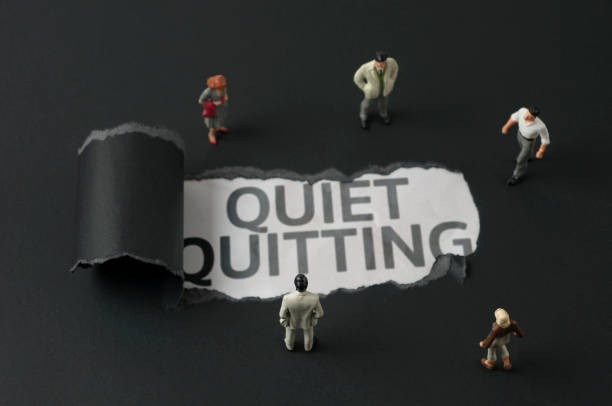
There’s been a lot of conversation about quiet quitting over the past few years.
Employees are doing the minimum. Pulling back. Disengaging emotionally while still technically doing their jobs.
It’s been analyzed, debated, and labeled as a workforce problem.
But there’s a harder truth most organizations avoid.
Quiet quitting doesn’t usually start with employees.
It starts with leadership.
Not in obvious ways. Not in ways that would immediately trigger concern. Leaders still show up. They run meetings. They respond to emails. They make decisions when necessary.
But something shifts.
The edge softens.
The urgency fades.
The willingness to engage in difficult, uncomfortable work begins to disappear.
And that’s where culture starts to change.
𝑻𝒉𝒆 𝑺𝒖𝒃𝒕𝒍𝒆 𝑩𝒆𝒈𝒊𝒏𝒏𝒊𝒏𝒈 𝒐𝒇 𝑳𝒆𝒂𝒅𝒆𝒓𝒔𝒉𝒊𝒑 𝑫𝒊𝒔𝒆𝒏𝒈𝒂𝒈𝒆𝒎𝒆𝒏𝒕
Leadership quietly quitting rarely looks like disengagement on the surface.
It looks like a restraint.
A leader who once addressed problems directly starts letting things slide. Conversations that used to happen quickly get delayed. Issues that require intervention are quietly tolerated instead.
At first, these decisions feel reasonable.
The leader tells themselves they’re choosing their battles. That’s not everything that needs to be escalated. Maintaining stability is more important than creating friction.
But over time, those small decisions begin to compound.
And what once felt like thoughtful restraint becomes consistent avoidance.
𝑨𝒗𝒐𝒊𝒅𝒂𝒏𝒄𝒆 𝑰𝒔 𝑾𝒉𝒆𝒓𝒆 𝑪𝒖𝒍𝒕𝒖𝒓𝒆 𝑺𝒕𝒂𝒓𝒕𝒔 𝒕𝒐 𝑩𝒓𝒆𝒂𝒌
Organizations don’t collapse because of one bad decision.
They erode because of repeated moments where the right decision was avoided.
When leaders stop addressing performance issues, standards begin to blur. When they delay difficult conversations, tension builds beneath the surface. When they prioritize comfort over clarity, confusion spreads.
Employees notice all of it.
They may not say it directly, but they feel it.
They see when expectations shift depending on the situation. They recognize when accountability is inconsistent. They understand when leadership is no longer willing to confront what needs to be confronted.
And when that realization sets in, something important changes.
Trust weakens.

𝑬𝒎𝒑𝒍𝒐𝒚𝒆𝒆𝒔 𝑫𝒐𝒏’𝒕 𝑫𝒊𝒔𝒆𝒏𝒈𝒂𝒈𝒆 𝑭𝒊𝒓𝒔𝒕—𝑻𝒉𝒆𝒚 𝑹𝒆𝒔𝒑𝒐𝒏𝒅
One of the biggest misconceptions about quiet quitting is that employees initiate it.
In reality, most employees are responding to the environment around them.
When leadership is engaged, clear, and consistent, employees tend to follow that lead. They invest energy. They take initiative. They care about outcomes.
But when leadership begins to pull back, employees adjust.
Not because they’ve suddenly lost motivation.
But because they’ve lost clarity.
Why go above and beyond if expectations aren’t clearly enforced?
Why take risks if decisions stall?
Why raise concerns if nothing gets addressed?
Over time, employees begin matching the level of engagement they see from leadership.
And that’s when quiet quitting becomes visible.
𝑻𝒉𝒆 𝑺𝒍𝒐𝒘 𝑺𝒉𝒊𝒇𝒕 𝒇𝒓𝒐𝒎 𝑳𝒆𝒂𝒅𝒆𝒓𝒔𝒉𝒊𝒑 𝒕𝒐 𝑴𝒂𝒊𝒏𝒕𝒆𝒏𝒂𝒏𝒄𝒆
At some point, quietly disengaged leaders stop leading and start maintaining.
They keep things running. They avoid disruption. They focus on keeping operations stable rather than pushing for growth or improvement.
On paper, this can look like success.
There are no major conflicts. No visible breakdowns. The organization continues to function.
But beneath that stability, something is missing.
Momentum.
Without active leadership, organizations don’t move forward. They drift. They settle. They become comfortable with “good enough” instead of striving for better.
And over time, that drift becomes the defining characteristic of the culture.
𝑾𝒉𝒚 𝑳𝒆𝒂𝒅𝒆𝒓𝒔 𝑸𝒖𝒊𝒆𝒕-𝑸𝒖𝒊𝒕
Most leaders don’t disengage because they stop caring.
They disengage because they get worn down.
Leadership today requires navigating constant pressure. There are competing priorities, internal politics, and expectations coming from every direction. Decisions often carry consequences, no matter which path is chosen.
Over time, that pressure takes a toll.
Leaders begin protecting their energy.
They avoid unnecessary conflict.
They delay decisions that feel heavy.
They disengage from problems that seem too complex or politically risky.
What starts as self-preservation slowly becomes disengagement.
And while it may feel like relief to the leader, it creates uncertainty for everyone else.
𝑻𝒉𝒆 𝑹𝒊𝒑𝒑𝒍𝒆 𝑬𝒇𝒇𝒆𝒄𝒕 𝑨𝒄𝒓𝒐𝒔𝒔 𝒕𝒉𝒆 𝑶𝒓𝒈𝒂𝒏𝒊𝒛𝒂𝒕𝒊𝒐𝒏
Leadership behavior sets the tone for everything that follows.
When leaders become passive, that passivity spreads.
Managers hesitate to enforce standards because they don’t feel supported. Teams become less proactive because they sense a lack of direction. High performers begin questioning whether their effort makes a difference.
Over time, the organization begins operating at a lower level—not because people are incapable, but because the environment no longer demands excellence.
This is one of the most expensive forms of disengagement.
Because it doesn’t look like failure.
It looks average.
𝑻𝒉𝒆 𝑪𝒐𝒔𝒕 𝒐𝒇 𝑺𝒕𝒂𝒚𝒊𝒏𝒈 𝑪𝒐𝒎𝒇𝒐𝒓𝒕𝒂𝒃𝒍𝒆
Comfort is often the hidden driver behind leadership quiet quitting.
It feels easier to avoid conflict than to confront it. It feels safer to delay decisions than to risk making the wrong one. It feels more manageable to maintain stability than to push for change.
But comfort comes at a cost.
Unaddressed issues don’t disappear. They grow. Misalignment deepens. Trust erodes quietly.
And eventually, the organization reaches a point where small problems have turned into systemic ones.
At that stage, rebuilding becomes much harder than addressing the issues early would have been.
𝑹𝒆-𝑬𝒏𝒈𝒂𝒈𝒊𝒏𝒈 𝑳𝒆𝒂𝒅𝒆𝒓𝒔𝒉𝒊𝒑 𝑩𝒆𝒇𝒐𝒓𝒆 𝑰𝒕’𝒔 𝑻𝒐𝒐 𝑳𝒂𝒕𝒆
The good news is that leadership disengagement is reversible.
But it requires awareness.
Leaders need to recognize when they’ve shifted from leading to avoiding. They need to reflect on where they’ve chosen comfort over clarity and stability over progress.
Re-engagement doesn’t require dramatic change.
It starts with small, intentional actions.
Addressing one difficult conversation that’s been delayed.
Making one clear decision that’s been avoided.
Setting one standard that’s consistently enforced.
These moments rebuild momentum.
And momentum is what restores culture.

𝑳𝒆𝒂𝒅𝒆𝒓𝒔𝒉𝒊𝒑 𝑺𝒆𝒕𝒔 𝒕𝒉𝒆 𝑪𝒆𝒊𝒍𝒊𝒏𝒈
Organizations don’t rise above the level of leadership engagement.
They mirror it.
If leaders are fully present, willing to engage, and committed to addressing challenges, that energy spreads. Teams respond. Performance improves. Culture strengthens.
If leaders withdraw, even slightly, the opposite happens.
That’s why culture doesn’t collapse from the bottom up.
It follows the behavior modeled at the top.
𝑻𝒂𝒌𝒆𝒂𝒘𝒂𝒚
Quiet quitting isn’t just an employee issue.
It’s a leadership signal.
When leaders begin avoiding the hard parts of their role, culture starts to shift—quietly at first, then more visibly over time.
The solution isn’t more engagement programs.
It’s more engaged leadership.
Because when leaders step back into the work—fully present, willing to confront challenges, and committed to clarity—teams don’t just follow.
They re-engage.
Let’s Keep the Conversation Going
I want to hear how this is showing up where you work. How are you seeing leadership energy drop, curiosity fade, or decision-making slow down—and what happens to your culture when leaders start to quietly check out? When restructurings, layoffs, or large-scale changes hit, where have leaders been fully present and steadying—and where has their disengagement made fear and uncertainty worse?
Connect with me on LinkedIn at Jason Greer – Employee and Labor Relations Expert to share what you’re seeing, and if you’re ready to re-engage leadership and rebuild a culture where people feel seen, heard, and energized to perform, visit hiregci.com to explore how my team and I can help.
Stay resilient. Stay connected. The workplace doesn’t need more promises—it needs more presence from the people leading it.